
AI-Based Label Recognition for the Second-Hand Clothing Market
AI + OCR system for automatic extraction of garment label information
Use Case:
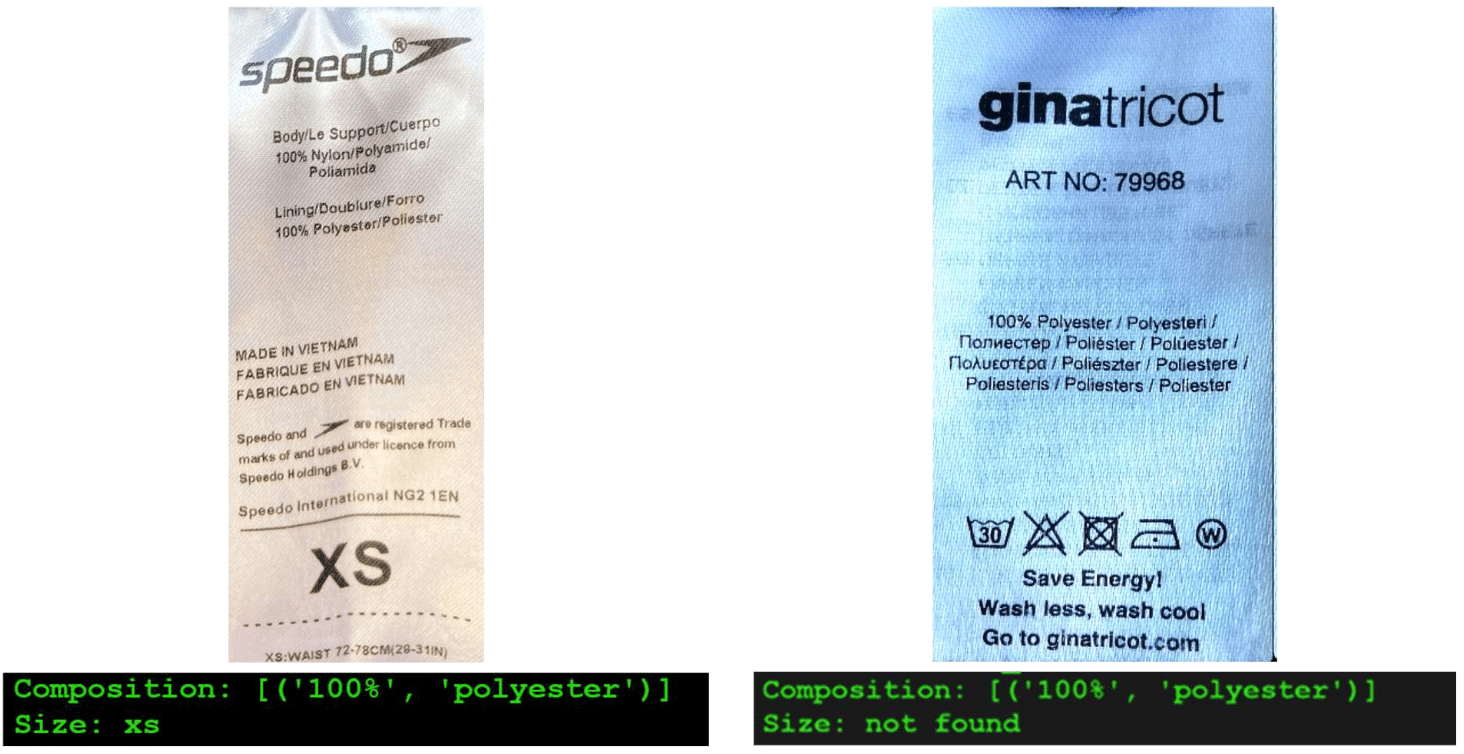
Automation of metadata capture (size composition care symbols origin.
Outcome:
- 90% accuracy in composition and size recognition;
- End-to-end garment tag processing in <10 seconds via API;
- Targeting small B2B resale shops with limited resources.
Ecosystem Support:
- StairwAI pilot project;
- Algorithm training support;
- Local infrastructure with AI experts.
AI Relevance:
Shows practical use of AI for retail process automation, contributing to circular economy and sustainable fashion.
Summary:
MB Noselfish, a small Lithuanian company, aimed to streamline the information intake process for online second-hand clothing retailers by addressing the labor-intensive, error-prone task of manually entering label data. These retailers often struggle with time-consuming operations that require staff to read and input garment details such as size, material composition, and care instructions from physical labels—resulting in inefficiencies and inconsistent product listings.
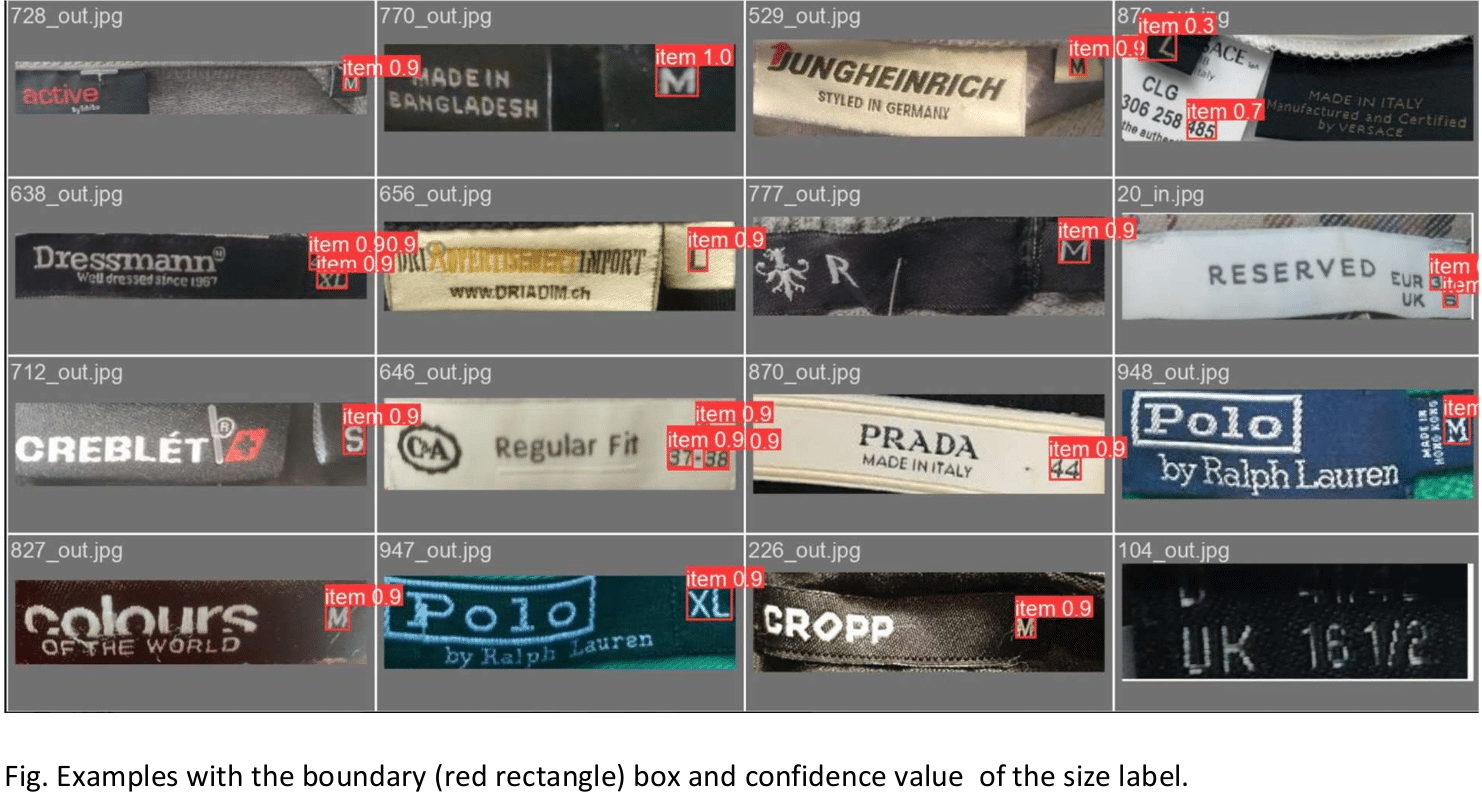
Through the StairwAI Support Program, and benefiting from its “test before invest” scheme, MB Noselfish developed and validated AiPIC, an AI-powered image analysis system capable of extracting label information using a hybrid approach that combines OCR and image recognition. The system automatically identifies key garment attributes such as size (92.93% accuracy), composition (90.23%), brand (77.1%), country of origin (81.27%), and care symbols (86.75%), significantly reducing the need for manual input. The solution relies on a custom-built local server infrastructure equipped with a high-performance GPU, eliminating the need for external HPC resources. More than 1,000 annotated image records were collected to train deep learning models, including YOLOv5 variants for object detection. A layered architecture allows the system to handle varied fonts, sizes, and image qualities across different label types. The AI logic integrates multiple models and iterative validation to reduce false positives, ensuring scalability and robustness in real-world use. Accessible via a web GUI and API, the solution enables B2B clients to upload a garment photo and receive structured label data in under 10 seconds. It supports up to 30 requests per minute on standard hardware, with scalability potential up to 500 images/minute using advanced configurations. MB Noselfish now targets online second-hand retailers—particularly small enterprises with non-automated processes and high manual overhead. The solution is positioned to drive market competitiveness, reduce operational costs, and contribute to sustainable fashion by supporting the circular economy. Commercialization is underway via a “pay-per-photo” pricing model, and initial traction with pilot users validates the approach. As a broader vision, the company aims to offer the solution across Europe’s growing second-hand market, which is projected to grow 127% by 2026.
Media