
AI-Based Stratosphere Forecasting from Ground Particle Detection
STRATOS-DS – AI-enabled stratospheric state estimation using ground-based particle detection
Use Case:
Replacing high-altitude weather balloons with AI-powered models that infer stratospheric profiles and temperatures by analyzing cosmic ray interactions at ground level
Outcome:
- Achieved TRL7 for ground-based stratosphere temperature prediction
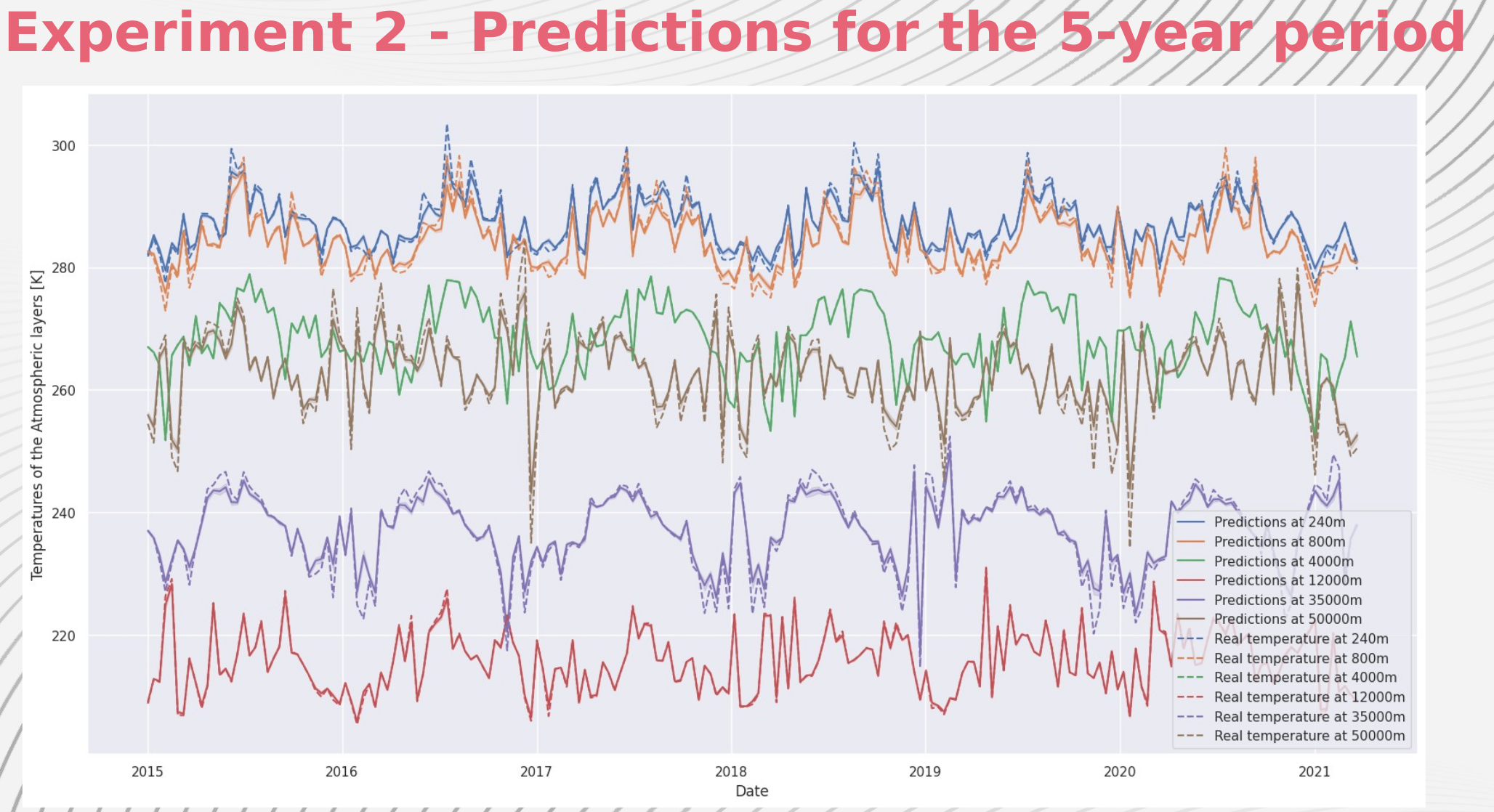
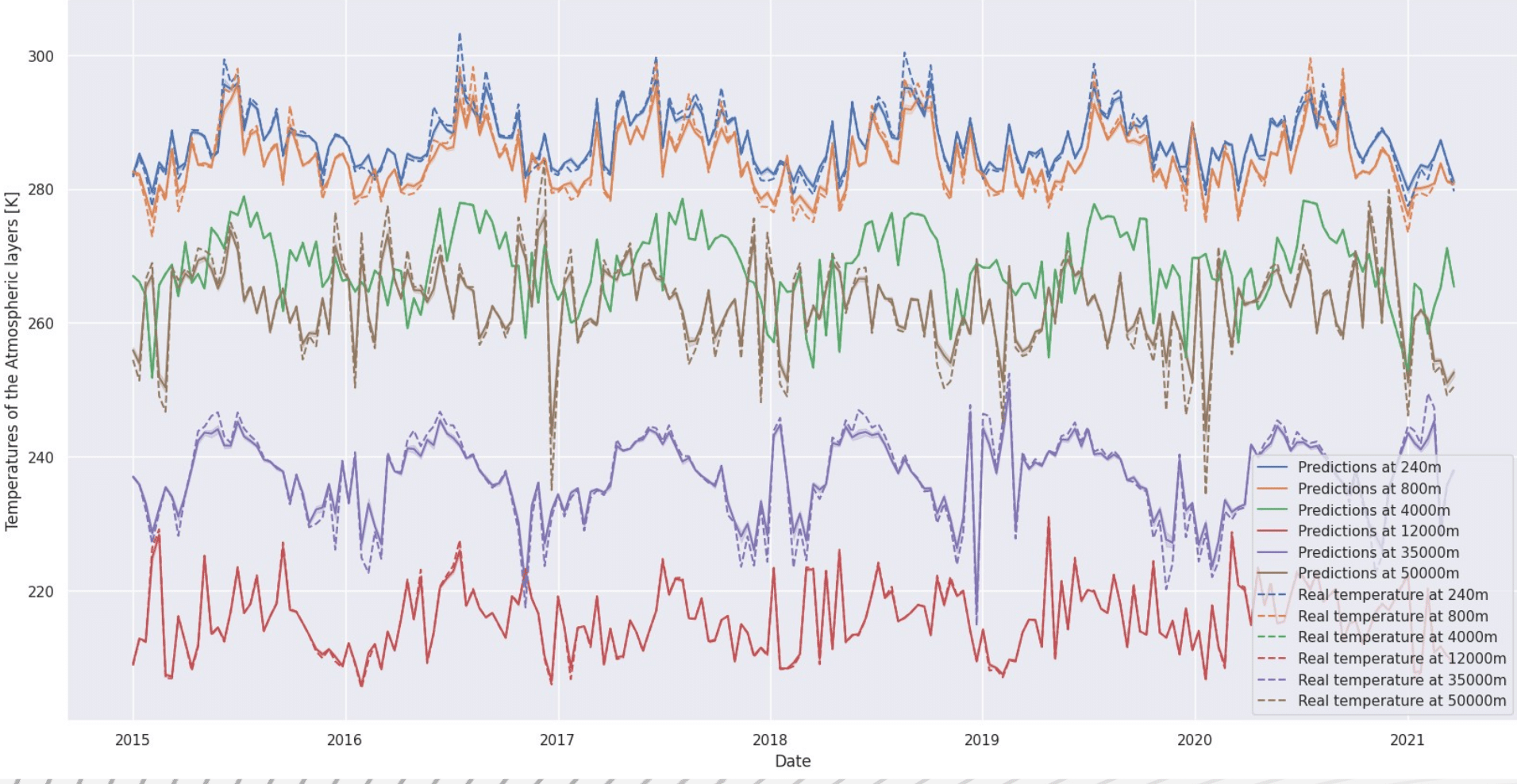
- ML models reached ±3ºC accuracy within minutes of particle monitoring
- Real-time differentiation of seasonal atmospheric states
- Model generalization validated on multi-year data profiles
Ecosystem Support:
StairwAI project guidance; partnership with the University of Santiago de Compostela (USC) for simulation data and detector tuning; AIRES particle simulator integration
AI Relevance:
Demonstrates AI’s role in replacing physical infrastructure with low-cost inference systems; open source pipeline for AI explainability and reproducibility in climate science; showcases AI fusion with physics simulations and sensor networks for non-invasive atmospheric sensing
Summary:
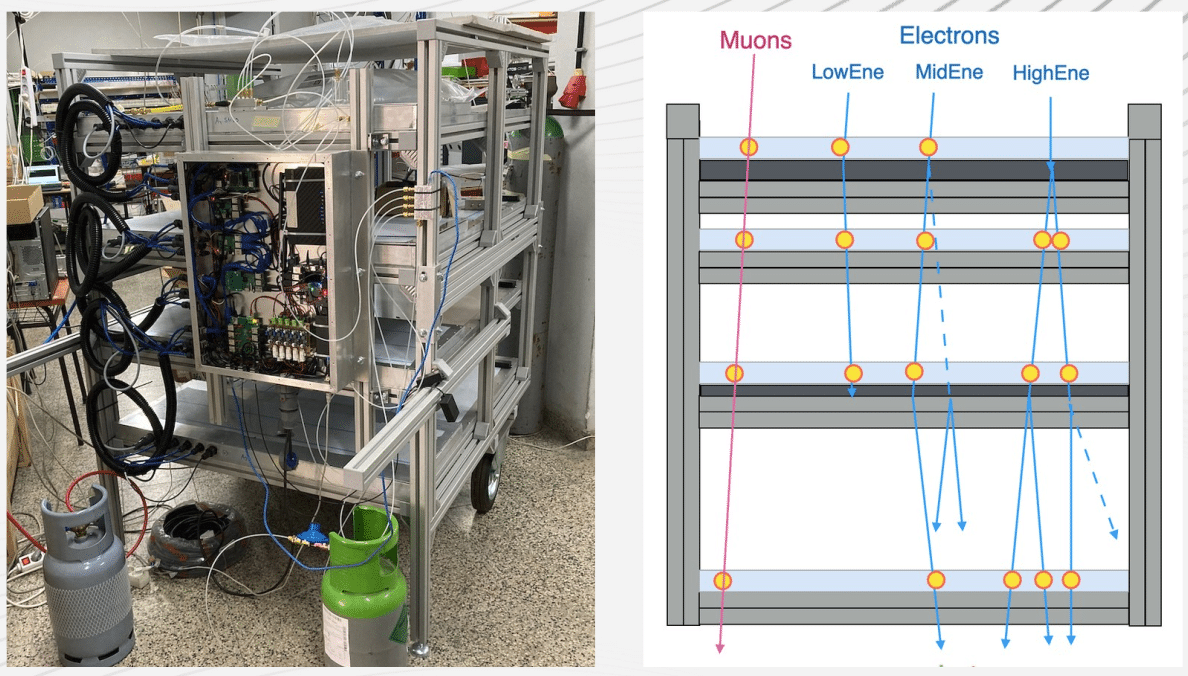
Hidronav Technologies SL, a Spanish SME developing advanced particle detection systems, launched STRATOS-DS to revolutionize how we monitor the stratosphere. Traditionally, stratospheric data is collected through expensive and logistically complex balloon probes. STRATOS-DS proposes an alternative: deducing atmospheric states using readings from ground-level cosmic ray particle showers.
By integrating simulations from the AIRES particle simulator and real-world data from USC, Hidronav trained a series of machine learning models to classify seasonal stratospheric profiles and regress temperature values across six atmospheric layers—reaching up to 50,000 meters. Over 2 million synthetic particle showers were used to train and validate the models. With this approach, STRATOS-DS demonstrated that even with a 2m² detector operating for under 10 minutes, it’s possible to predict atmospheric temperatures with a mean absolute error as low as ±3ºC.
The platform’s design leverages modular data pipelines—covering simulation, feature extraction, preprocessing, and ML training—automating model optimization across thousands of configurations. STRATOS-DS also showed that model performance is minimally impacted by detector size, making it ideal for miniaturized deployments in remote or extreme locations.
This success story exemplifies how AI can democratize access to sophisticated environmental sensing without the need for costly infrastructure. It opens the door to scalable, low-maintenance alternatives for weather forecasting, early warning systems, and climate modeling.
Media