
 Give us your feedback
AI-powered Microfossil Interpretation for Geological Analysis
AI-based semantic segmentation of microfossils using scanned microscope slides

Use Case:
Automated image analysis to classify geological microfossils for applications in oil & gas exploration carbon sequestration and mineral prospecting.
Outcome:
- Digitization and AI reduced sample analysis time by 50%;
- Enabled reproducible, auditable, and scalable interpretation of subsurface data;
- TRL7 prototype;
- Validated by the Portuguese Geological Survey
Ecosystem Support:
StairwAI “test before invest” initiative; AI expert mentoring; access to annotation infrastructure.
AI Relevance:
Demonstrates practical deployment of AI-based computer vision for geoscience data interpretation, supporting environmental and industrial exploration efforts.
Summary:
Chronosurveys Lda, a micro-sized geoscience company based in Portugal, faced a critical challenge: modernizing the identification of microfossils—tiny organic indicators essential for subsurface geological analysis in industries like oil & gas, carbon storage, and critical mineral exploration. Traditionally, biostratigraphic analysis relied on manual microscope-based observation, a slow, non-reproducible and expert-dependent process.
With support from the StairwAI European Digital Innovation Hub through the “test before invest” initiative, the company implemented an integrated solution combining high-resolution imaging and artificial intelligence. A medium-capacity slide scanner (Motic EasyScan Pro6) was deployed, allowing digitization of microscope slides containing thousands of microfossils. This reduced the average analysis time per sample from 8 hours to 4–6 hours.
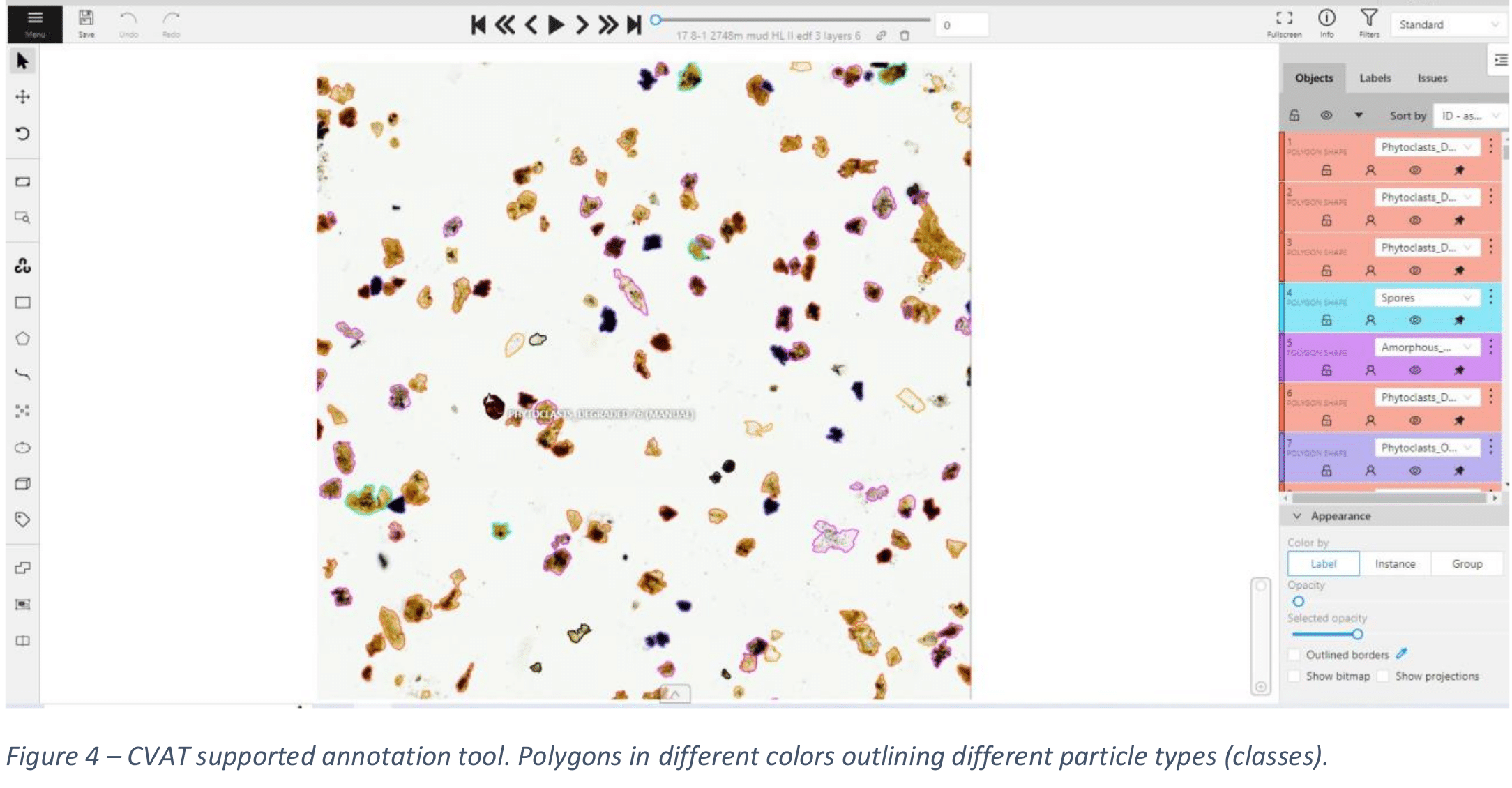
In parallel, two AI specialists developed a training dataset and a convolutional neural network (FPN architecture in PyTorch) capable of segmenting and classifying over 20 types of microfossil particles, including spores, pollen, dinocysts, and amorphous organic matter.The solution included a web-based interface for image annotation and result visualization, along with backend deployment using Docker, FastAPI, and ONNX-compatible inference models. Results are stored, auditable, and reproducible.
The benefits have been significant: faster and automated microfossil interpretation, greater reproducibility, less reliance on expert users, and improved auditability through centralized digital storage. Currently at TRL7, the system is in internal use and is being prepared for broader deployment, with the Portuguese Geological Survey as a confirmed beta user.
Thanks to StairwAI, Chronosurveys is now positioned as a leading provider of automated microfossil digitization and interpretation services, with commercial prospects in Europe, the Middle East, and North America.
Media